Aftercare in Swinging: What It Is and Why It Matters

Swinging can hit harder than you expect. Your body comes down. Your mind replays details. Your relationship takes the impact. Aftercare is what you do right after a swap, group play, or a full night out to stabilize both partners. It covers check-ins, reassurance, hydration, food, sleep, and clear next steps.
This guide breaks aftercare into simple actions you can use the same night and the next day. You will learn what aftercare looks like in swinging, why it prevents resentment and shutdown, and how to build a plan that fits your rules and your limits. You will also learn how to handle common friction points, including jealousy, misread signals, and post-event regret, plus what to do when you are apart.
What is aftercare in swinging what it is?
Definition
Aftercare in swinging is the intentional support you give your partner after a sexual or social play experience. It covers emotional needs and physical needs. You do it to help your nervous system settle and to keep your connection stable.
Aftercare can take two minutes or two hours. It can happen in private right after play, in the car on the way home, and again the next day.
- Emotional support: reassurance, affection, validation, calm presence.
- Physical support: water, food, shower, sleep, pain relief, warmth, cleanup.
- Logistics support: safe ride home, privacy, phone off, time to decompress.
How it differs from BDSM aftercare
Swinging aftercare overlaps with BDSM aftercare, but the drivers often differ. BDSM aftercare often centers on intensity, role dynamics, and chemical drop after impact or power exchange. Swinging aftercare more often centers on attachment stress, comparison, jealousy, and social exposure.
In swinging, common aftercare goals look like this.
- Reconfirm you choose each other.
- Reduce spiraling after seeing your partner with someone else.
- Lower shame and self judgment after breaking a personal comfort level.
- Process social stress from clubs, groups, alcohol, and new people.
- Catch small boundary misses before they turn into resentment.
What aftercare is not
Aftercare does not fix broken boundaries. If someone ignored a hard limit, you need repair steps, accountability, and rule changes. Do not label that as aftercare.
- It is not forced cuddling or forced sex.
- It is not a mandatory full debrief at 2 a.m. when you feel depleted.
- It is not pressure to say you are fine when you are not.
- It is not a way to avoid updating your rules and boundaries.
Where it fits in a swinging night
Use aftercare in three windows. Each window solves a different problem.
- Post-play: immediate regulation. Hydrate, clean up, reconnect, confirm consent and comfort.
- Post-party: transition home. Reduce alcohol effects, prevent arguments in the car, set a sleep plan.
- Next-day check-in: clarity and course correction. Compare notes, name any triggers, update boundaries, and decide what you want next time.
Why aftercare matters in swinging (emotional, relational, and practical benefits)
Why aftercare matters in swinging
Sex with other people can hit your nervous system hard. Excitement, stress, and alcohol can stack. Aftercare helps you come back to baseline. It turns a high-intensity night into something you can integrate.
- Emotional stability. You reduce the odds of a jealousy spike, shame, drop, and next-day rumination.
- Relational stability. You protect your bond and prevent small misreads from turning into fights.
- Practical follow-through. You handle safer sex, logistics, and expectations while memories stay clear.
Preventing negative emotions
Swinging can trigger fast emotional swings. Your brain looks for threats. It replays scenes. It fills gaps with worst-case stories. Aftercare gives you clean inputs while your emotions still run hot.
- Jealousy spikes. You ground first, then name what you felt. You ask for one specific reassurance.
- Shame. You separate values from actions. You state what felt aligned, and what did not.
- Drop. You treat it like a body state, not a relationship verdict. Water, food, sleep, and calm touch help.
- Rumination. You stop the replay loop by agreeing on timing. No heavy processing at 2 a.m. Debrief when rested.
If jealousy keeps repeating, use tools that target it directly. See How to Handle Jealousy in Swinging: Practical Tools That Work.
Strengthening your primary relationship
Aftercare protects your core attachment. Swinging can poke at fear of replacement and fear of disconnection. Reassurance and repair lower that threat signal.
- Reassurance. You say what you choose, who you choose, and what you want more of at home.
- Security. You restate agreements in plain language. You confirm that your partner still sits first.
- Attachment repair. If one moment stung, you name it without blame. You offer a concrete fix for next time.
Keep your debrief simple. Use a repeatable format. See How to Debrief After Swinging With Your Partner (A Simple Framework).
Improving communication and trust with partners you played with
Aftercare also affects your reputation. Clear follow-up builds trust with other couples and solo partners. Silence can read as regret or rejection.
- Confirm consent and comfort. Send a short message that you had a good time, and ask if they feel okay.
- Set expectations. State whether you want to play again, stay friends, or keep it one-time.
- Protect privacy. Agree on what details stay private, and what can be shared.
Reducing misunderstandings
Most blowups come from unclear meaning, not bad intent. Aftercare helps you label what happened with shared words.
- Clarify what was enjoyable. Name one thing you liked and why. This reinforces good choices.
- Clarify what was not. Name one limit that felt close, crossed, or confusing. Keep it behavioral and specific.
- Update rules. Change one agreement at a time. Confirm you both understand the same version.
If your agreements feel fuzzy, build them before the next event. See Questions Couples Should Ask Before Swinging (Boundaries, Safer Sex, Goals) and How to Talk to Your Partner About Swinging (Without Pressure).
Supporting safer sex decisions
Safer sex does not end when play ends. Aftercare is the time to check comfort with what happened and decide next steps.
- Verify what was used. Condoms, gloves, dental dams, lube type, and any slips. Write it down if needed.
- Confirm comfort with outcomes. If something unexpected happened, state it fast. Do not wait for a fight.
- Decide next steps. Testing timelines, emergency contraception, STI prevention, and partner notifications.
- Reset boundaries. If risk tolerance changed, update your rules before the next invite.
Types of aftercare in swinging (choose what fits your dynamic)
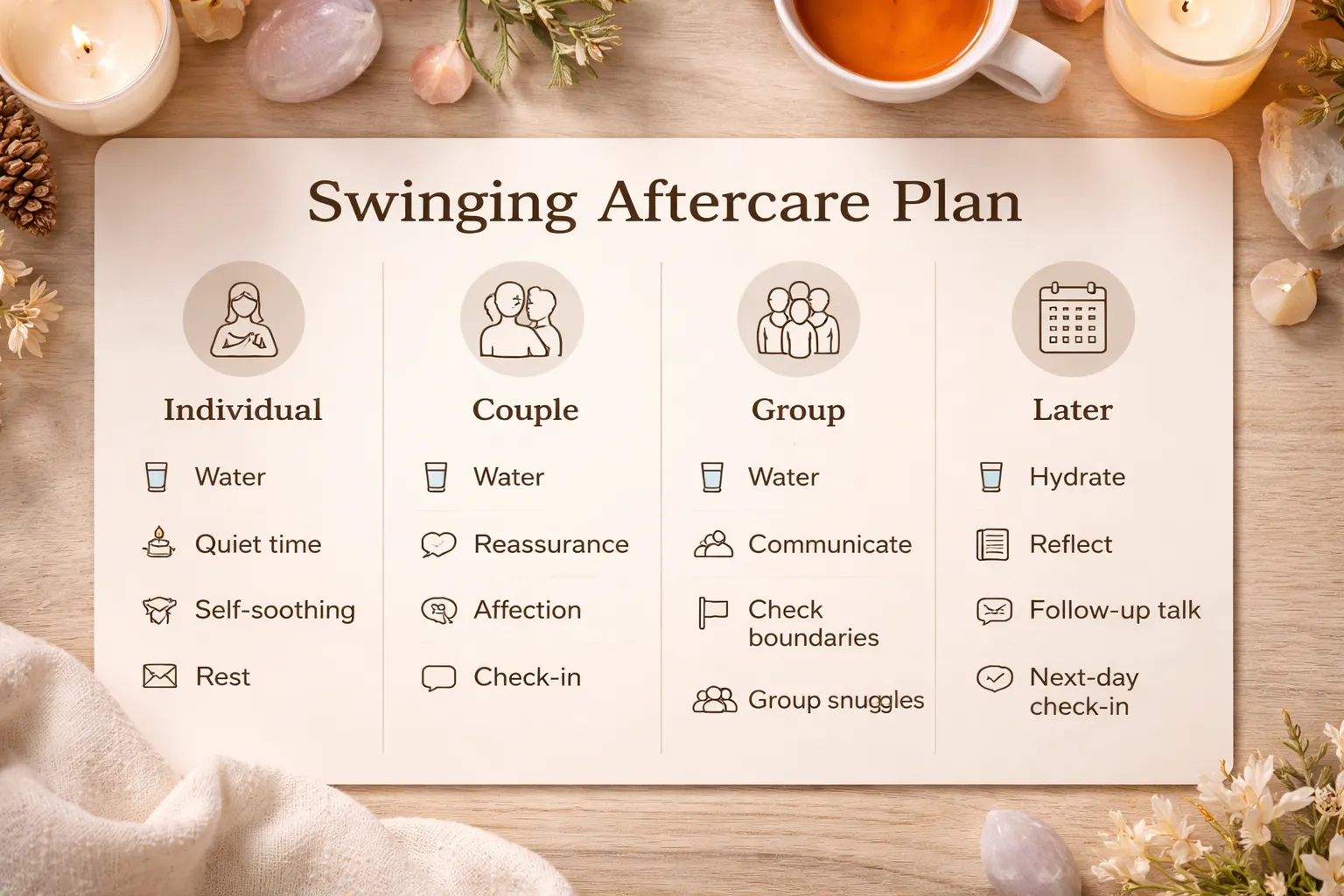
Types of aftercare in swinging (choose what fits your dynamic)
Aftercare is support you give after play. You match it to your bodies, your relationship, and the type of encounter. Keep it simple. Pick a plan before you play, then adjust after.
Individual aftercare
You may feel wired, flat, sensitive, or quiet after sex. Treat that as normal. Focus on basic regulation first.
- Grounding: Sit or lie down. Slow breathing. Feet on the floor. Name what you feel in your body.
- Hydration and food: Water first. Add salt or electrolytes if you sweat a lot. Eat something easy.
- Quiet time: No talking. No screens. Low light. A shower can help.
- Self-soothing: Blanket, headphones, familiar music, hand on chest, gentle pressure.
- Body check: Look for soreness, irritation, condom friction, or latex reactions. Clean up. Treat small issues early.
- Journal notes: Write what worked, what did not, and what you want next time. Keep it factual.
Couple aftercare
Your couple bond can feel stretched after a swap. Reconnect on purpose. Do it the same way every time.
- Reconnection ritual: Shower together, make tea, change sheets, or sit and hold hands for five minutes.
- Reassurance: Say what you enjoyed about your partner. Say what you choose going forward.
- Intimacy after: You can have sex, you can cuddle, or you can sleep. Do what helps you feel secure, not what you think you should do.
- Short debrief: Share highlights and one hard moment. Save deep processing for later if either of you feels raw.
- Jealousy plan: If jealousy shows up, name it, then use a tool. Keep a separate resource list ready. Link it to your routine and use it fast. See how to handle jealousy in swinging.
Group or guest aftercare
Guests need respect and closure. You do not owe ongoing intimacy, but you do owe basic care and clear boundaries.
- Respectful check-ins: Ask, then accept the answer. “You good to get home.” “Need water.” “Any pain or discomfort.”
- Closure: Thank them. Confirm everyone is safe to drive. Confirm any testing or disclosure steps if relevant.
- Boundaries on contact: Decide messaging rules before you leave. Who texts first. What is okay to share. What stays private.
- No post-game pressure: Do not push for feedback, reassurance, or future plans in the moment.
- Feelings management: If attachment risks exist, set limits early. Use a clear plan for follow-up and distance. See how to handle feelings for another couple in swinging.
In-the-moment vs. later
Split aftercare into phases. Immediate care keeps things stable. Later care builds learning and trust.
- Immediate support: Water, bathroom, cleanup, warmth, quiet. A simple “You are safe, I am here” helps.
- Car-ride home: Keep it low stakes. No interrogation. Share one positive thing each, then choose silence or music.
- Next-day follow-up: Talk when you are rested. Review boundaries, emotions, and logistics. Update your rules in writing if needed.
- Scheduling: Put a time on the calendar for the longer talk. That reduces rumination and late-night arguments.
Low-touch and neurodiversity-friendly options
Some people do worse with heavy touch or intense eye contact after play. Build a plan that supports regulation and reduces surprise.
- Space: Agree that one or both of you can take solo time without it meaning rejection.
- Structure: Use the same sequence each time, water, bathroom, snack, shower, bed. Predictability lowers stress.
- Predictable scripts: Use short lines you both accept. “I am overstimulated.” “I need 20 minutes alone.” “We are okay.”
- Low-sensory setup: Dim lights, minimal noise, clean clothes, no strong scents.
- Text-based debrief: If talking feels hard, write it. Trade notes in the morning.
- Consent for touch: Ask every time. “Hug yes or no.” Keep it binary.
If you want a simple template for planning this, use your pre and post checklist. See swinging first time checklist and how to talk to your partner about swinging.
Common aftercare practices in swinging (a practical menu)
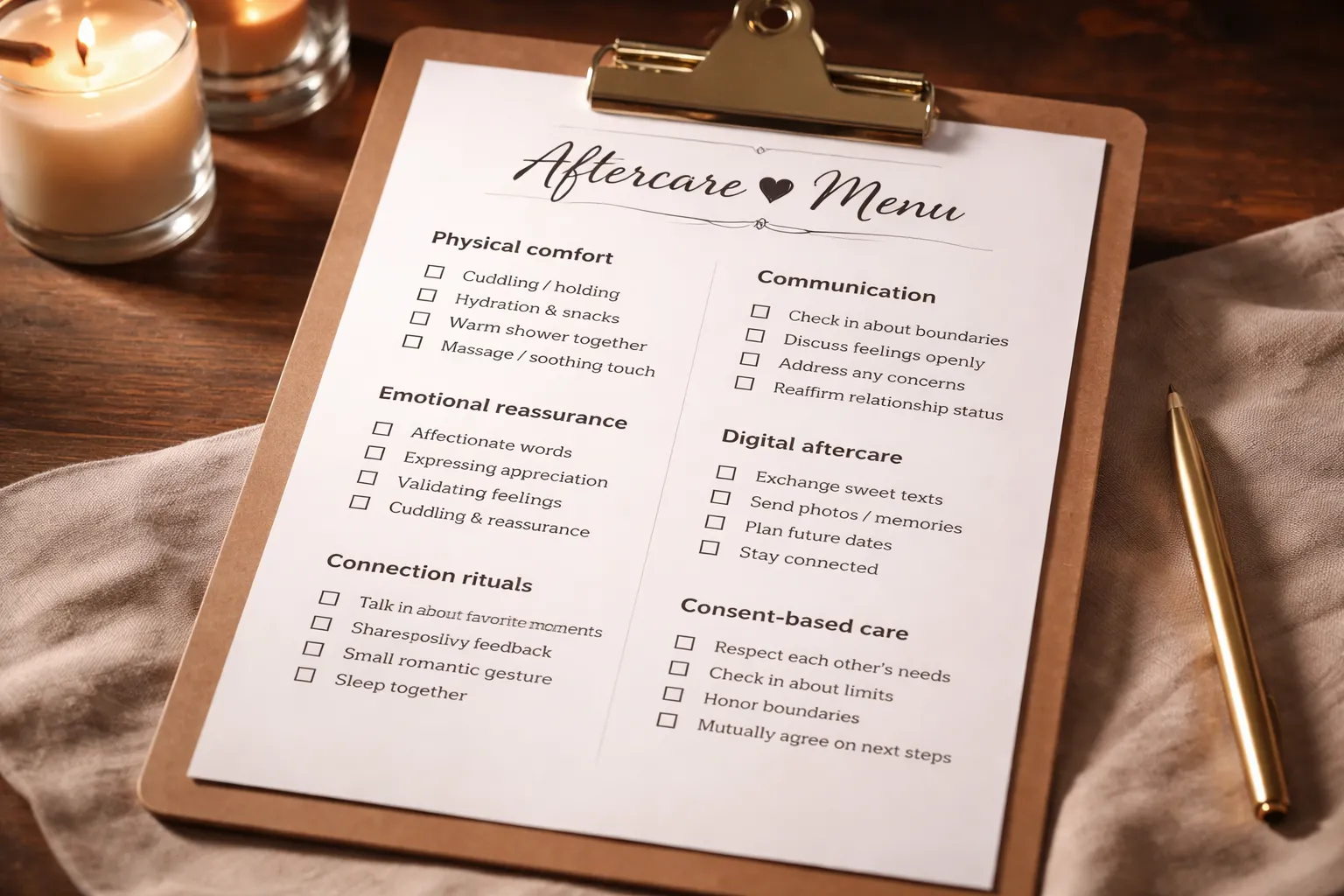
Physical comfort
Start with basic care. Lower the stress load on your body so your mind can settle.
- Water first. Each of you drinks a full glass. Then decide what comes next.
- Shower or quick rinse. Make it optional. Some people want skin-to-skin comfort, others want clean space first.
- Snacks with salt and carbs. Fruit, crackers, yogurt, or a simple sandwich. Avoid heavy food if you feel nauseous.
- Clean clothes and wipes. Fresh underwear, a tee, face wipes, and mouthwash reduce sensory overload fast.
- Sleep plan. Set a hard stop time. Decide if you sleep now, nap, or go home before you talk.
- Cozy setup. Blanket, low light, phone on silent, bathroom clear, trash handled. Remove friction points.
Emotional reassurance
Your partner may feel exposed. Lead with care. Keep it direct. Do not argue about intent.
- Affirm the bond. “I am here. We are good. I choose you.”
- Name what you liked about them. “I loved how you checked in with me.”
- Validate feelings without fixing. “That makes sense.” “I hear you.” Then pause.
- Own your part fast. “I missed that cue. I am sorry.” Do not add a defense.
- Reduce comparison talk. No rating of bodies, skills, or attention. It spikes insecurity.
Connection rituals
Aftercare works better when you repeat a simple ritual every time. It tells your nervous system what happens next.
- Cuddle time. Set a timer for 10 to 20 minutes. No debrief during the timer.
- Private intimacy. Optional. Only if both of you want it. Use clear consent and a slow pace.
- An “us” moment. Shower together, brush teeth side by side, or share one snack. Small and consistent beats big gestures.
- Grounding touch. Hand on chest, hand holding, or feet touching. Ask first.
Communication practices
Debrief in layers. Do not try to solve everything while you are still wired.
- Gentle debrief. Keep it short. Focus on what your body and mood need right now.
- Highlights plus hard moments. Each of you shares one good moment and one hard moment. Then stop.
- Boundary update. Write down any new “yes,” “no,” or “maybe.” Add it to your shared rules list. Use your questions list if you need structure from Questions Couples Should Ask Before Swinging.
- Timing rule. If either of you feels flooded, delay the deep talk to the next day. Use notes if needed.
- Future plan. Decide one change for next time. Keep it specific. Example, “No play without a mid-scene check-in.”
Digital aftercare
Phones can help or harm. Decide what contact looks like before you start replying.
- Partner-first check-in. Send your partner a quick message even if you are in the same room. “You okay. Want water or space.”
- Host or couple follow-up. If you plan to message the other people, keep it simple. “Thanks for tonight. We are home safe.”
- No secret threads. Hidden DMs create distrust fast. If your agreement requires transparency, follow it.
- No processing with the other couple. Do not vent about your partner to them. Keep your relationship work inside your relationship.
- Do not escalate online. Late-night sexting can bypass consent talks. Leave it for a planned time.
Consent-based care
Stop guessing. Ask. Keep the options simple so your partner can answer.
- Use one question. “What do you need right now.” Then wait.
- Offer a short menu. “Water, shower, cuddle, alone time, or talk.”
- Confirm touch each time. “Hug yes or no.” “Hold hands yes or no.” Keep it binary.
- Respect a no fast. No sighs. No pressure. Switch to a different option.
- Close the loop. “Is this helping.” If not, change the plan.
If you want a step-by-step structure for this, use your post checklist from Swinging First Time Checklist. If aftercare keeps turning into conflict, take a break and use a clear closing plan from How to Stop Swinging and Close the Relationship (Without Resentment).
How to plan aftercare before a swing encounter (templates and agreements)

Pre-event conversation, needs, triggers, reassurance
Plan aftercare before you leave the house. Do it when you feel calm. Keep it short. Write it down.
- Your top needs: sleep, food, water, shower, quiet, touch, space, words, reassurance, privacy.
- Your top triggers: being ignored, watching oral, certain words, condoms off, flirting after a no, being left alone, rough play, alcohol level.
- Your reassurance style: hugs, hand on your back, eye contact, praise, direct statements, silence, alone time, texting on the ride home.
- Your recovery time: 10 minutes, 1 hour, next morning, 48 hours before heavy talk.
Use the same structure you use for boundaries. Keep your rules and scripts in one place. If you need examples, see Swinging Rules and Boundaries: Examples, Scripts, and Best Practices.
Set expectations for stopping, leaving, and closing the night
Decide what happens if one of you wants to stop. Decide what happens if you disagree. Remove negotiation in the moment.
- Stop rule: either partner can stop any activity, at any time, for any reason.
- Leave rule: if either partner wants to leave, you leave. No debate. No delay.
- Care rule: the partner who calls stop gets support first, then logistics.
- Exit logistics: separate car or rideshare plan, cash set aside, phone charged, meeting point.
- Post-exit contact: no texting other partners for X hours, or until you both say yes.
Safer sex and privacy plan, STI talk, discretion, photos
Aftercare fails when safety and privacy feel shaky. Agree on these before you meet anyone.
- Barrier plan: condoms for all penetration, dental dams if you use them, gloves if you use them, lube you trust.
- Swap limits: full swap, soft swap, same-room only, separate-room allowed, no overnights.
- Testing plan: what tests, how often, what counts as current, what you do after a new partner.
- Fluid rules: where ejaculation is allowed, condom change rules, no condom removal.
- Alcohol rule: max drinks, stop time, no play if either feels impaired.
- Photos rule: no photos, no videos, no phones in play spaces, no face pics shared, no posting.
- Discretion rule: names, workplace info, address, social media adds, tagging, mutual friends.
Signals and check-ins, code words, time-outs, reconnection breaks
Build check-ins into the night. Do not rely on vibes. Use a simple system.
- Green word: “Good.” Means you feel steady.
- Yellow word: “Pause.” Means you need a break and a check-in.
- Red word: “Out.” Means stop now and leave the room.
- Physical signal: hand squeeze pattern, tap on shoulder, hand on chest.
- Reconnection break: every 30 to 60 minutes, step away, water, eye contact, quick reset.
- Time-out rule: either partner can step out alone or together. No one follows unless invited.
Put these in your pre-party checklist. Keep it consistent. See Swinging First Time Checklist for a full structure.
Aftercare plans by format, house party, club, hotel takeover, vacation
Make the plan match the setting. Your aftercare needs change with noise, distance, and sleep.
- House party: set a hard leave time, pick a private place to reset, agree on a quiet ride home, plan food at home.
- Club: pick a meet point, set check-in times, plan a calm debrief only after shower and water, avoid heavy talk in the parking lot.
- Hotel takeover: book your own room, plan a 20 minute decompression window, set “no visitors after” as default, sleep protection matters.
- Lifestyle vacation: schedule off-days, plan solo time blocks, decide on nights off, set a rule for early bedtime without guilt.
Templates and agreements you can copy
Keep it one page. Use clear yes and no statements.
If you need a clean debrief structure, use How to Debrief After Swinging With Your Partner (A Simple Framework).
Simple scripts, questions to ask before and after
Use short prompts. Do not argue. Do not explain. Collect data.
- Before you go: “What would make you feel cared for tonight.”
- Before you go: “What is one thing you do not want to see or hear.”
- Before you go: “What does ‘Pause’ mean for you, touch, words, or space.”
- Before you go: “If we need to leave, what is our exact exit plan.”
- After, in the first hour: “Do you want touch, food, shower, or quiet.”
- After, in the first hour: “What is one thing you need from me right now.”
- After, next day: “What worked. What hurt. What changes next time.”
If aftercare keeps turning into shutdown or fights, stop booking events and use a clear closing plan. See How to Stop Swinging and Close the Relationship (Without Resentment).
When aftercare isn’t enough: red flags, repair, and getting support
Aftercare can fail. You see the pattern. You feel fine at the venue, then you crash at home. You get numb, angry, or clingy. You replay details, check phones, or demand proof. You start avoiding touch. Sleep breaks, appetite drops, work suffers. If this repeats, stop booking events. Do a clean pause and use a closing plan. Rebuild your basics first. Tighten rules, reset boundaries, and fix communication before you “try again.” Some issues need more than a cuddle and a talk. You may need repair talks with structure, a longer recovery window, or outside support. When safety, consent, or honesty slips, treat it as a red flag, not a phase.
- Red flags: coercion, pressure, “you owe me,” ignored safewords, boundary testing, lying by omission, secret messaging, unsafe sex choices.
- Aftercare failure signs: repeated shutdown, panic, rage, stonewalling, days-long rumination, intimacy drop, compulsive checking.
- Repair moves: pause play, write a shared debrief, set a 7 day no new partners rule, agree on a re entry checklist.
- Support options: sex positive therapist, couples counselor, vetted community mentors, medical support after risky exposure.
Read our detailed guide: When aftercare isn’t enough: red flags, repair, and getting support - Aftercare in Swinging: What It Is and Why It Matters
FAQ
What is aftercare in swinging?
Aftercare is what you do after play to reset and reconnect. It covers body care, emotional check-in, and logistics. You agree on what you need, do it right away, then follow up later. You treat it as part of the plan, not an extra.
Why does aftercare matter?
It lowers conflict after intense sex, novelty, or group dynamics. It helps you spot jealousy, shame, or regret early. It protects trust. It improves repeat experiences. Skipping it raises the odds you replay events in your head and argue about details.
How long should aftercare take?
Plan two layers. Immediate aftercare takes 5 to 30 minutes. Follow-up takes 10 to 20 minutes within 24 hours. Add a longer debrief in 48 to 72 hours if you had first-time partners, new acts, or strong emotions.
What should aftercare include?
- Body: water, food, shower, sleep, pain check, STI risk check.
- Emotions: name feelings, validate, no debate.
- Info: recap boundaries, condoms, fluids, changes.
- Next steps: what you want more of, less of, stop.
What if one of you needs space after play?
Set a time-bound space rule. Example, 30 minutes alone, then a check-in. Say what you need and what you will do. No silent treatment. No punishment. If space always replaces connection, treat it as a repair issue.
How do you do aftercare when you played separately?
Set a reconnect script before you go out. Afterward, share facts first, then feelings. Keep it short. Avoid graphic details unless you both asked for them. End with a clear plan for next time. Use your pre-play questions list to guide it.
When should you skip debrief details?
Skip details when they trigger spirals. Share safety facts, condoms, fluids, and consent issues. Then share emotions and needs. If you want more detail, ask for it later in a calm window. Put detail levels in your boundaries plan.
What are signs you need repair, not aftercare?
Watch for blame, withdrawal, panic, sleep loss, or repeated fights. Watch for boundary breaks, pressured consent, or unsafe sex. If you keep re-litigating the same night, you need a repair plan. Pause new partners and set a re-entry checklist.
How does aftercare work with another couple?
Agree on exit timing and privacy. Keep partner-to-partner aftercare separate first. Then do a brief group check, thanks, boundaries respected, any concerns. Avoid processing heavy emotions in a group setting. Do that at home with your primary partner.
How do you handle STI concerns during aftercare?
Do a quick facts check. What protection did you use, any failures, any fluid contact. Decide next steps. Emergency contraception, testing timeline, or PEP where relevant. Do not argue about intent. Focus on actions and medical guidance.
Can aftercare prevent jealousy?
It reduces it, it does not erase it. You still need clear agreements before you swing and a debrief after. Aftercare helps you name jealousy early and ask for reassurance. If jealousy stays high, tighten boundaries and slow the pace.
Conclusion
Conclusion
Aftercare is the part that protects your relationship. It lowers stress, reduces shame, and keeps small issues from turning into fights. It also helps you spot health and consent problems early.
Keep your aftercare simple and repeatable. Plan it before you meet anyone. Treat it as a rule, not a bonus.
- Set a time: Do a check-in the same night, then again in 24 to 72 hours.
- Cover four areas: body, emotions, boundaries, sexual health.
- Use one script: “What felt good, what felt off, what do you need from me now, what changes next time.”
- Act fast: If jealousy stays high, tighten boundaries and slow the pace. If consent feels unclear, stop and reset agreements.
- Write it down: Keep a short note of wins, limits, and follow-ups.
If you need stronger structure, build it into your rules and boundaries. If you plan to pause, use a clean closing plan from closing the relationship without resentment.
Final tip, pick one aftercare plan and run it every time. Consistency does more than intensity.
-
Swinging First Time Checklist: What to Do Before, During, and After
6 months ago -
How to Handle Jealousy in Swinging: Practical Tools That Work
6 months ago -
How to Talk to Your Partner About Swinging (Without Pressure)
6 months ago -
Swinging Rules and Boundaries: Examples, Scripts, and Best Practices
6 months ago -
Questions Couples Should Ask Before Swinging (Boundaries, Safer Sex, Goals)
6 months ago
-
- Pre-event conversation, needs, triggers, reassurance
- Set expectations for stopping, leaving, and closing the night
- Safer sex and privacy plan, STI talk, discretion, photos
- Signals and check-ins, code words, time-outs, reconnection breaks
- Aftercare plans by format, house party, club, hotel takeover, vacation
- Templates and agreements you can copy
- Simple scripts, questions to ask before and after
-
-
- What is aftercare in swinging?
- Why does aftercare matter?
- How long should aftercare take?
- What should aftercare include?
- What if one of you needs space after play?
- How do you do aftercare when you played separately?
- When should you skip debrief details?
- What are signs you need repair, not aftercare?
- How does aftercare work with another couple?
- How do you handle STI concerns during aftercare?
- Can aftercare prevent jealousy?
-
- Pre-event conversation, needs, triggers, reassurance
- Set expectations for stopping, leaving, and closing the night
- Safer sex and privacy plan, STI talk, discretion, photos
- Signals and check-ins, code words, time-outs, reconnection breaks
- Aftercare plans by format, house party, club, hotel takeover, vacation
- Templates and agreements you can copy
- Simple scripts, questions to ask before and after
-
-
- What is aftercare in swinging?
- Why does aftercare matter?
- How long should aftercare take?
- What should aftercare include?
- What if one of you needs space after play?
- How do you do aftercare when you played separately?
- When should you skip debrief details?
- What are signs you need repair, not aftercare?
- How does aftercare work with another couple?
- How do you handle STI concerns during aftercare?
- Can aftercare prevent jealousy?
-
How to Debrief After Swinging: Break Jealousy Loops
6 months ago -
How to Repair Trust After a Boundary Is Broken
6 months ago -
How to Debrief After Swinging: Fix Resentment Early
6 months ago -
Aftercare & Support in Swinging: Red Flags and Resources
6 months ago -
Swinging Consent and Boundaries: Safer Sex & Comfort
6 months ago
-
Swinging First Time Checklist: What to Do Before, During, and After
6 months ago -
Swinging vs Open Relationship: Key Differences Explained
6 months ago -
How to Handle Jealousy in Swinging: Practical Tools That Work
6 months ago -
How to Talk to Your Partner About Swinging (Without Pressure)
6 months ago -
Swingers Lifestyle Slang: Acronyms, Codes, and What They Mean
6 months ago