How to Start Swinging for Beginners: Your Step‑by‑Step Guide

Swinging is consensual partner swapping or shared sexual play between adults. It can strengthen your relationship, or damage it fast if you skip the basics. This guide shows you how to start swinging with clear consent, solid boundaries, and safer sex practices.
You will learn how to talk with your partner without pressure. How to set rules you can follow. How to choose the right entry point, online, clubs, or trusted events. How to screen people, spot red flags, and protect privacy. How to plan your first meet, manage nerves, and leave if anything feels off. How to debrief after and adjust your rules.
Use these resources as you go:
- Questions to ask first: Questions Couples Should Ask Before Swinging (Boundaries, Safer Sex, Goals)
- Rules you can copy: Swinging Rules and Boundaries: Examples, Scripts, and Best Practices
- If you are married: Swinging While Married: How to Approach It With Trust and Boundaries
What ‘How to Start Swinging for Beginners’ Means: Definitions, Types, and Expectations
Definition: What swinging is
Swinging means you and your partner choose consensual, recreational sexual experiences with other people. You keep your primary relationship. You set rules. You follow them.
Most couples treat swinging as a shared activity, not a separate dating life. You decide what counts as “in” and what counts as “out.” Use clear rules before you start. If you need examples, use Swinging Rules and Boundaries: Examples, Scripts, and Best Practices.
Common formats: How swinging usually works
- Soft swap: Sexual play without intercourse. Many couples include oral and mutual touch, and exclude penetration. You define your line.
- Full swap: Intercourse is on the table. You still control who, when, and how.
- Same-room: You play in the same space as your partner. Many beginners choose this for comfort and visibility.
- Separate-room: You play in different spaces. This needs stronger communication, stronger exit plans, and tighter safer sex rules.
- Couple-to-couple: Two couples connect. This is common for first experiences because the “pair structure” stays intact.
- Singles at events: Some parties allow single men, single women, or both. Rules vary. Vet events before you go.
What to expect at events and meetups
- You will see a range of boundaries. Many people socialize first and play later, or not at all.
- Consent rules drive everything. You ask. You wait for a clear yes. You stop fast.
- Rejection happens. You stay polite. You move on.
- Alcohol can show up. You keep your judgment intact. You protect your safer sex plan.
- You will hear house rules. Follow them or leave.
If you want a step-by-step plan for your first night, use Swinging First Time Checklist: What to Do Before, During, and After.
Swinging vs polyamory vs open relationships
| Topic | Swinging | Open relationship | Polyamory |
|---|---|---|---|
| Main goal | Shared sexual experiences | Sex, and sometimes dating, outside the couple | Multiple loving relationships |
| Emotional focus | Usually limits romantic attachment | Varies by couple | Emotional bonds are expected |
| Typical structure | Couple-centered, often together | Can be together or separate | Ongoing relationships, often separate |
| Common agreements | Clear rules on acts, rooms, and safer sex | Rules on dating, time, disclosure, and safer sex | Agreements on time, transparency, and relationship management |
Myths and misconceptions you should drop now
- Myth: Swinging fixes relationship problems. Reality: It adds stress to weak communication. Handle trust issues first.
- Myth: No feelings allowed. Reality: You cannot control feelings. You can control actions, disclosure, and boundaries.
- Myth: Everyone does full swap. Reality: Many couples stay soft swap or do selective full swap.
- Myth: You must say yes to be “cool.” Reality: You owe nobody access to you or your partner.
- Myth: Jealousy means you should quit. Reality: Jealousy is data. You use it to adjust rules, pace, and partners.
- Myth: Swinging always ruins relationships. Reality: Outcomes depend on fit, communication, and guardrails. Learn what helps couples succeed in Does Swinging Ruin Relationships? What Helps Couples Succeed.
Step 1: Talk First—Communication, Consent, and Aligning Your ‘Why’
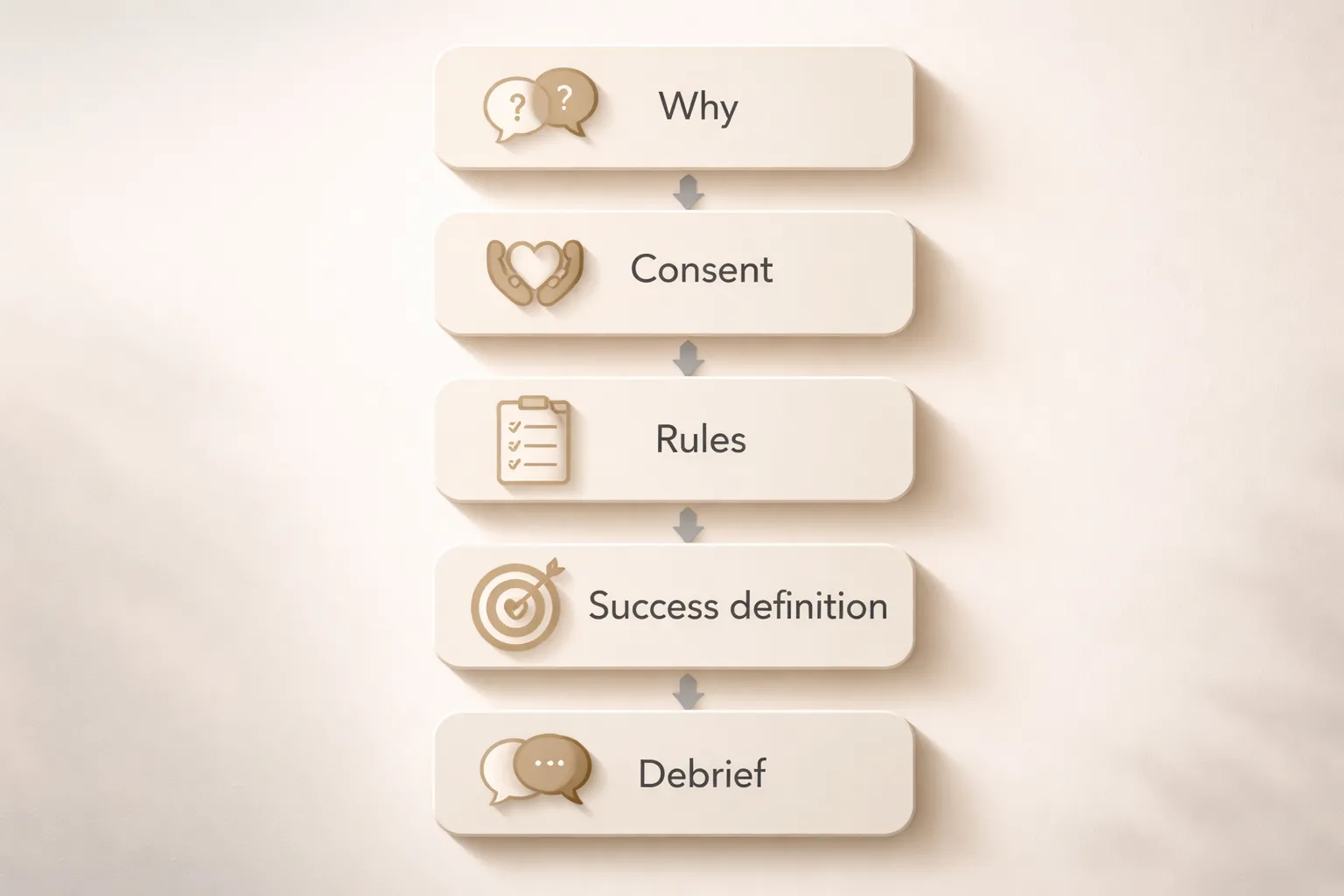
Clarify your motivations and goals
Start with your “why.” Write it down. Say it out loud.
- Curiosity: You want to see what the lifestyle looks like in real life.
- Novelty: You want new experiences without ending your relationship.
- Fantasy exploration: You want to try specific scenarios with clear limits.
- Social community: You want friends, events, and sex positive spaces.
Keep it clean. Swinging does not fix a broken relationship. If trust feels shaky, slow down and rebuild first. Use clear boundaries, especially if you are married. See Swinging While Married: How to Approach It With Trust and Boundaries.
Establish enthusiastic consent
Consent needs two yes votes. One yes does not override one no.
- Enthusiastic: You both want it, not tolerate it.
- Specific: You agree on what is allowed and what is not.
- Ongoing: You can pause or stop at any time.
- Reversible: Either of you can change your mind without punishment.
Use a simple rule. If either of you feels unsure, you do not proceed. You revisit the plan later.
How to start the conversation
Pick a calm time. Do not start this talk during conflict, after sex, or while drinking.
Use a direct tone. Avoid selling. Avoid guilt. Avoid deadlines.
- Open with your goal, not your request. “I want to talk about a fantasy and see how you feel.”
- Share your why in one sentence. Then stop and listen.
- Ask for a first reaction. Accept it as data.
- Set a follow up time. One talk rarely settles it.
Remove pressure. Make “no” safe. People agree more honestly when they do not fear consequences.
Create a shared definition of success for your first experience
Define success before you meet anyone. Keep the first win small.
- Information success: You read, talk, and build a rule set.
- Social success: You go to a club, party, or meet and greet. No play.
- Connection success: You flirt and practice saying yes and no.
- Physical success: You stick to one pre agreed step, like kissing only.
Agree on your guardrails. Examples include condoms always, no surprises, no separation, no overnights, or no friends and coworkers.
Use a checklist so you do not improvise under stress. See Swinging First Time Checklist: What to Do Before, During, and After.
Common emotional reactions and how to normalize them
You can feel more than one thing at once. That is normal.
- Nerves: You face new social and sexual situations. Plan smaller steps.
- Excitement: Novelty triggers energy. Do not let it erase your rules.
- Insecurity: Comparison happens. Use reassurance and clear boundaries.
- Jealousy: Treat it as a signal, not a verdict. Adjust pace, partners, and limits.
Schedule a debrief after every step. Use three prompts, what felt good, what felt bad, what changes next time. If jealousy shows up, use practical tools from How to Handle Jealousy in Swinging: Practical Tools That Work. For broader relationship outcomes, see Does Swinging Ruin Relationships? What Helps Couples Succeed.
Step 2: Set Boundaries and Rules (Then Make Them Practical)
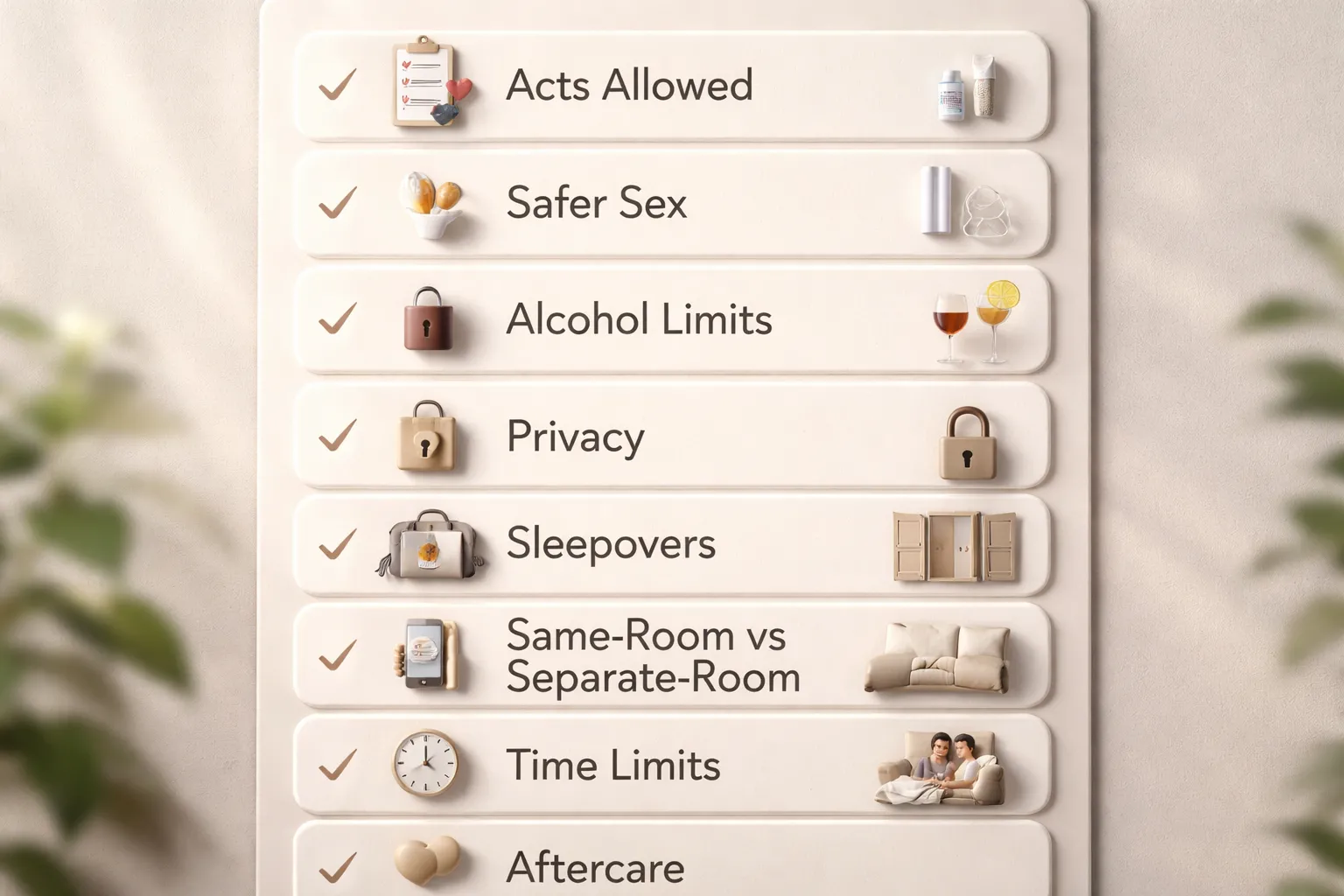
Boundaries, Rules, and Agreements. Know the Difference.
Boundaries protect you. They describe what you will do, and what you will not do. Example, I will not have sex without condoms.
Rules control behavior, often to reduce anxiety. Example, You cannot kiss anyone.
Agreements are mutual choices you both consent to. Example, We will only play together in the same room for the first three meets.
This distinction matters because boundaries stay valid even when plans change. Rules often break under pressure. Agreements work when you can follow them in real settings.
If you want scripts and examples, use Swinging Rules and Boundaries: Examples, Scripts, and Best Practices.
Non-Negotiables to Decide Early
- Acts allowed. List yes, no, and maybe. Include oral, penetration, toys, kink, receiving versus giving, and same-sex play.
- Safer-sex expectations. Condoms for penetration, barriers for oral, no fluid exchange, birth control plan, STI testing cadence, and what happens if someone refuses protection.
- Alcohol and drugs. Set a hard limit. Many couples do best with a two-drink max, or sober-first meets. Avoid new substances on play nights.
- Privacy. No face photos shared, no real names, no social media adds, no filming, no posting, and a clear rule on texting partners after.
- Sleepovers. Yes or no. If yes, define where you sleep, what counts as a sleepover, and the morning-after expectations.
Write these down. Keep them short. You should be able to read them in under two minutes before a date.
Logistics Boundaries That Prevent Problems
- Same room or separate rooms. Same room reduces surprises. Separate rooms increase intensity and risk. Start same room if you feel uncertain.
- Check-ins. Agree on a signal and a script. Example, pause, water break, quick hug, then a yes or no call.
- No leaving with others. Decide this early. If you allow it later, define limits, location, and return time.
- Time limits. Set an end time and stick to it. Fatigue drives bad choices.
- Exit plan. Either partner can end the night. No debate in the moment. You debrief later.
For tighter consent practices, use Swinging Consent and Communication: Tips to Stay Safe and Aligned.
Jealousy and Aftercare Planning
Plan for feelings before they show up. You do not need a perfect mindset. You need a plan you will follow.
- Reassurance needs. Decide what helps, hand holding, eye contact, verbal check-ins, or a private reset break.
- Debrief style. Use your three prompts, what felt good, what felt bad, what changes next time. Keep it short the same night. Go deeper the next day.
- Aftercare. Schedule a calm landing, shower, snack, cuddle, or quiet time. No problem solving at 2 a.m.
If jealousy hits hard, use How to Handle Jealousy in Swinging: Practical Tools That Work.
Create a First-Time Plan You Can Execute
Many beginners fail by choosing a plan they cannot handle in real time. Pick a small first step. Make it specific.
Attach rules to each step. Example, same room only, condoms required, two-drink max, and a hard stop time. If you travel or live apart, keep your plan even tighter. Use Swinging for Long Distance Couples: How to Make It Work.
Step 3: Learn the Culture—Etiquette, Red Flags, and Common Swinger Terms
Step 3: Learn the Culture, Etiquette, Red Flags, and Common Swinger Terms
Rules keep you safe, culture keeps you welcome. Learn both before you show up. Start with consent basics. Ask first. Accept “no” fast. Do not negotiate. Keep your partner in your sight line if that is your rule. Use protection every time. Bring your own condoms and lube. Follow house rules without debate. Stay sober enough to read signals and leave on time. Watch for red flags. Pressure, secrecy, boundary pushing, and disrespect are deal breakers. Track common terms so you do not misread an invite. Soft swap, full swap, same room, parallel play, and unicorn all change expectations. If you travel or live apart, tighten your plan and your check-ins.
- Rule: Ask before you touch, kiss, or join.
- Rule: “No” ends the topic. No persuasion.
- Rule: Condoms required for any penetration.
- Rule: Two-drink max, no drugs.
- Rule: Same room only unless you both approve in advance.
- Rule: Hard stop time, leave together.
- Rule: Debrief within 24 hours, adjust rules before the next event.
Read our detailed guide: Step 3: Learn the Culture—Etiquette, Red Flags, and Common Swinger Terms - How to Start Swinging for Beginners: Your Step‑by‑Step Guide
Step 4: Find Safe Ways to Meet People (Apps, Events, Clubs, and Communities)
You have four main ways to meet people. Apps, events, clubs, and online communities. Each has a different risk profile. Start with the option that gives you the most control and the clearest rules. Build a basic screening system before you meet anyone. Verify identity. Confirm couple status. Share boundaries early. Move chat off platform only when you feel safe. Meet in public first when possible. At events, learn the venue rules, dress code, and consent policy before you go. At clubs, show up early, stay sober enough to judge well, and leave if staff feels lax. In communities, look for active moderators and clear reporting. Safety comes from structure, not luck.
- Apps: Fast matching, higher flake rate, needs strict vetting.
- Events: Best for learning culture, lower pressure, clearer norms.
- Clubs: Strong consent policies matter, choose reputable venues.
- Communities: Slow trust building, good for referrals and education.
Read our detailed guide: Step 4: Find Safe Ways to Meet People (Apps, Events, Clubs, and Communities) - How to Start Swinging for Beginners: Your Step‑by‑Step Guide
Step 5: Safety First—Sexual Health, Safer Sex, and Personal Security
Safety sets the ceiling on how far you can go. Treat it as a system, not a vibe. Start with testing and proof. Use recent results, share dates, and agree on what “negative” means. Pick a barrier plan before you meet. Bring your own condoms, lube, and dental dams. State your rules early and repeat them in person. Use clear consent language, and stop the moment someone hesitates. Protect your identity. Keep early chats on-platform. Avoid sharing your address, workplace, or full name. Meet in public first when possible. Use a check-in text with a friend. Keep your own transport. Limit alcohol and drugs so you can keep judgment and boundaries.
- STI testing: agree on test type, date, and sharing method before contact.
- Safer sex: condoms for intercourse, condoms or dams for oral, change barriers between partners.
- Consent: use direct yes or no language, confirm before each new act.
- Personal security: protect identifying info, meet smart, keep exit control.
Read our detailed guide: Step 5: Safety First—Sexual Health, Safer Sex, and Personal Security - How to Start Swinging for Beginners: Your Step‑by‑Step Guide
Step 6: Your First Swinging Experience—A Beginner Playbook (From Arrival to Aftercare)
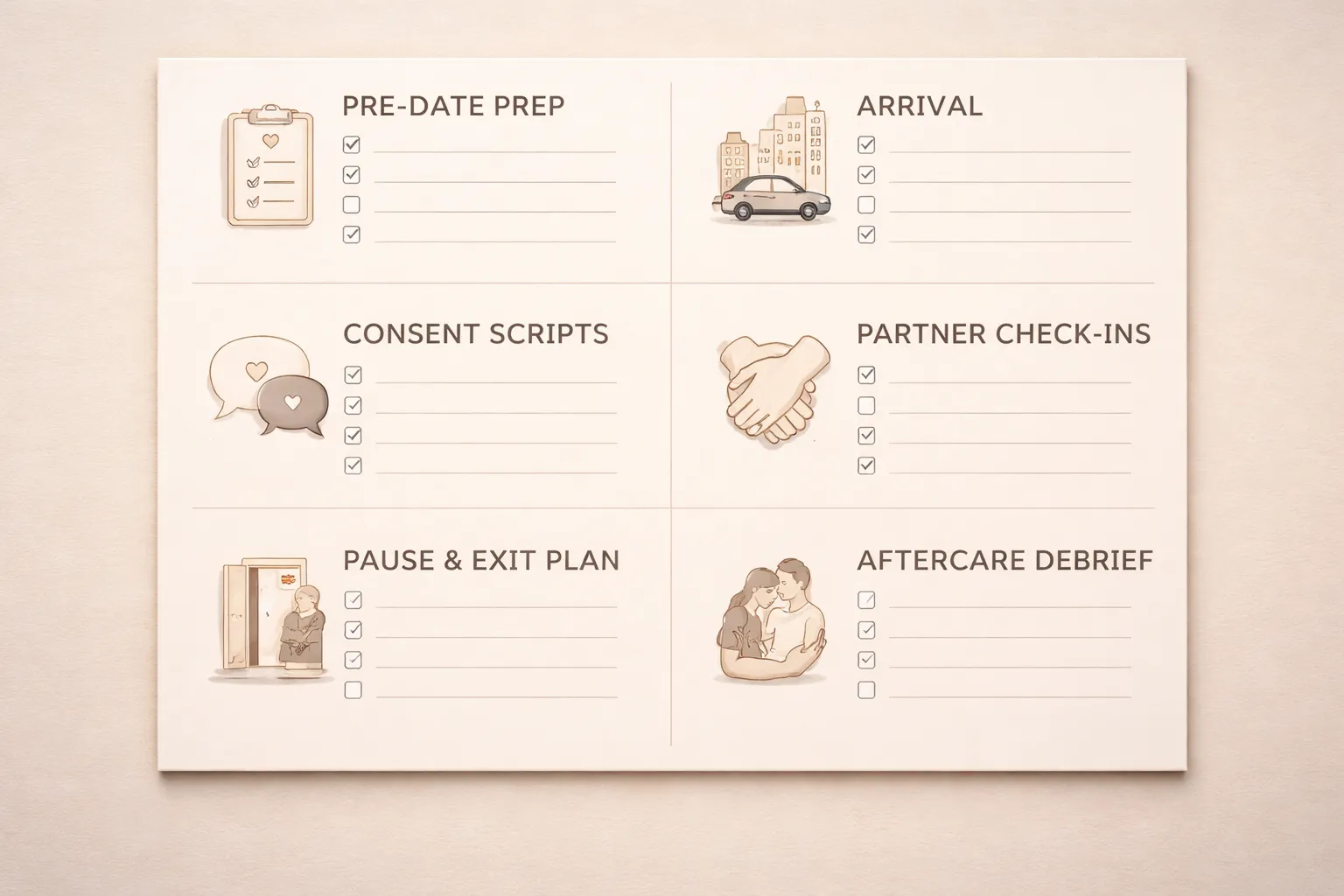
Pre-date checklist
You will make better choices when you prep. Keep it simple. Write it down. Review it together before you leave.
- Boundaries review: Restate your yes list, no list, and maybe list. Keep the maybe list small. If you have not agreed on something, treat it as a no. For examples and scripts, use Swinging Rules and Boundaries.
- Signals and safewords: Pick one word that means pause, one that means stop. Add a private hand signal for, “I need you now.” Agree that any signal ends the current action without debate.
- Supplies: Condoms in more than one size, lube, dental dams, wipes, towel, breath mints, spare underwear, small trash bag, and any meds you might need. Bring cash if the venue uses it.
- Outfits: Wear something you can take on and off fast. Avoid complicated belts, tight lace-ups, and fragile items. Bring a cover layer for arrival and exit.
- Hydration and food: Drink water before you go. Eat a real meal. Pack water if allowed. Limit alcohol. You want clear consent and good judgment.
- Expectations: Set one goal that does not require sex. Examples, meet one couple, stay two hours, leave if either of you feels off. Treat any play as optional.
At the venue or meet
Arrive, pay attention, then move. Do not rush into a room or a situation.
- Pace the first hour: Check in, take a lap, find the bar or lounge, and learn the layout. Keep your phone on silent and your head up.
- Read the room: Notice how people approach, how they ask, and how staff handle rules. If the vibe feels pushy, leave early. Early exits cost less than bad nights.
- Start with simple conversation: Names or nicknames only. Skip jobs, neighborhoods, and identifying details. Keep topics light until you feel safe.
- Ask for consent in plain words: Use direct questions. “Can I kiss you.” “Are you ok with hands under clothes.” “Do you want condoms for this.” Ask again when you change acts or change partners.
- Confirm boundaries fast: State your non-negotiables before play starts. Examples, condoms for penetration, no filming, no anal, no sleepovers. Do it before clothing comes off.
- Use barriers without negotiation: Put them on before penetration. Change condoms between partners and between acts that require it. Keep lube nearby so you do not improvise.
How to say no without friction
Keep it short. Keep it kind. Repeat once. Then disengage.
- Use a clean no: “No, thanks.” “Not for us.” “We are not doing that tonight.”
- Use a redirect: “We are here to meet people, not play yet.” “We are keeping it to kissing only.”
- End the interaction: “Nice meeting you. We are going to grab a drink.” Then move your body away. Do not debate.
- Escalation line: “Stop. This is not ok.” If they keep pushing, find staff and leave.
Keep connection with your partner
Your partner is your anchor. You need real-time contact, not mind reading.
- Touch points: Agree on a default touch. Hand on back, hand hold, or hip squeeze. Use it often.
- Eye contact: Make eye contact before new steps. Use it as a silent check-in.
- Timed check-ins: Step away every 20 to 30 minutes. Ask two questions, “Green, yellow, or red.” “Do you want to keep going, change pace, or leave.”
- Stay aligned in public: If one of you starts to drift into people-pleasing, pause and regroup. You can say, “We need a quick couple minute check-in.”
- If you are married: Keep extra structure your first time. Stronger check-ins reduce regret. Use Swinging While Married if you want a tighter plan.
If feelings change mid-way
Feelings change fast in new sexual settings. Treat that as normal. Act on it early.
- Pause script: “Pause. I need a minute.” Then step back, breathe, and drink water.
- Stop script: “Stop. I am done.” Put clothes back on. Get your partner. Leave the space.
- Leave script: “We are going to call it a night. Thanks.” No further explanation.
- Protect your exit: Keep your keys, wallet, and phone on you. Park where you can leave without being boxed in.
- Handle a mismatch: If one of you wants to continue and the other does not, you leave together. Your relationship outranks the room.
- Close the loop later: If you decide swinging is not for you, plan the exit process. Use How to Stop Swinging and Close the Relationship.
Aftercare and debrief
Your first debrief matters more than your first kiss. Do it the same night if you can. Keep it structured.
- Immediate aftercare: Water, food, shower, and quiet. If either of you feels shaky, slow down and get warm. Avoid big talks while you feel flooded.
- Reassurance: Say one clear line each. “I choose you.” “I am glad we did this together.” Keep it direct.
- Debrief in two rounds: First round, facts only. What happened, who, what acts, what protection. Second round, feelings and meaning.
- Use a simple review: What felt good. What felt bad. What felt risky. What you want next time. What is now a no.
- Update your rules: Change one to three rules based on what you learned. Do not rewrite your whole agreement in one night.
- Set next steps: Decide one action, book another social night, take a month off, or stay monogamous for a while. If you need help talking without pressure, use How to Talk to Your Partner About Swinging (Without Pressure).
In het kort:
- Start with alignment, you both want the same thing and you both can stop at any time.
- Set rules you can follow, keep them few, clear, and specific.
- Choose low-risk first steps, chat, meet for a drink, or attend a social night.
- Use safer sex every time, bring supplies, and agree on testing and condom rules.
- Protect your privacy, separate emails, limited photos, and no face pics if you need it.
- Use simple consent language, ask, confirm, stop fast when something feels off.
- Debrief after each experience, update one to three rules, set one next step.
- Pause or stop if it harms your relationship, use a clean exit plan.
Key takeaways you can use
- Go slow on purpose. Your first goal is data, not intensity. Do one new thing per night.
- Make your agreement small. Write 5 to 10 rules max. Add dealbreakers. Add a stop word. Add a time to leave.
- Pick a format that fits your comfort. Start with messaging. Then a public meetup. Then a social event. Then play, if you both want it.
- Plan safer sex like a checklist. Condoms, lube, barriers for oral, and a clear rule for switching partners. Decide how often you test and what you share.
- Use clear consent. Ask before touch. Ask before escalation. Accept no once. Stop fast and reset.
- Expect emotions. Treat jealousy as a signal. Name it. Ask for one support action. Do not punish your partner.
- Run a short debrief. What worked. What felt risky. What you want next time. What is now a no. For a framework, use How to Debrief After Swinging With Your Partner (A Simple Framework).
- Update, do not rewrite. Change one to three rules based on real events. Keep the rest stable.
- Know how to pause. A pause is a tool, not a failure. If you want to close, follow How to Stop Swinging and Close the Relationship (Without Resentment).
Quick beginner checklist
| Before | Agree on goals, rules, safe word, safer sex, exit plan. |
| During | Stay sober enough to choose, ask for consent, check in, leave when you said you would. |
| After | Debrief within 24 to 72 hours, change 1 to 3 rules, set one next step. |
FAQ
What is swinging?
Swinging is consensual sex with other people, done as a couple activity. You set rules, choose partners, and protect consent at every step. It differs from cheating because you agree in advance and you can stop at any time.
Do you need a strong relationship before you start?
You need basic trust, honest communication, and the ability to handle conflict without threats. If you cannot discuss jealousy, porn, or exes without blowups, pause. Build skills first, then revisit. Use a written rules list and an exit plan.
How do you bring up swinging with your partner?
Ask for a calm talk. Share your reasons and your fears. Offer a no-pressure option to say no. Agree on a timeline for a second talk. Use a structured list of prompts from Questions Couples Should Ask Before Swinging.
What rules should beginners set first?
Start with 5 to 10 rules. Cover condom use, alcohol limits, no means no, who you can meet, and when you leave. Add a safe word for instant stop. Keep rules testable. Update 1 to 3 rules after each experience.
How do you handle jealousy?
Plan for it. Name your triggers before you play. Use check-ins during and after. Stop when you feel flooded. After, debrief within 24 to 72 hours and choose one change. Read Aftercare in Swinging.
What does consent look like at a party or club?
You ask before you touch. You ask again before you escalate. You accept no without debate. You stay sober enough to choose. You watch for freeze responses, silence, or pressure, then stop. Consent must stay clear for everyone involved.
How do you reduce STI risk?
Use condoms for penetration and barriers for oral. Bring your own supplies. Get tested on a schedule and share dates, not vague claims. Avoid play when you have symptoms. Set rules for fluid bonding and stick to them. Use lube to reduce tearing.
What is a good first step for couples?
Start with a low-stakes event. Go to a meet-and-greet, a social night, or a club to observe only. Leave at the time you agreed. Debrief after. Use Swinging First Time Checklist.
Can you swing while married?
Yes, if you treat it like a shared project. Define why you want it, what counts as cheating, and how you protect the marriage. Keep date nights and private sex separate from group play. See Swinging While Married.
When should you stop or pause?
Pause if you feel dread, pressure, or constant fights. Stop if rules keep breaking or consent gets blurry. Take at least 30 days off, then review goals and boundaries. If you want to close, follow How to Stop Swinging and Close the Relationship (Without Resentment).
Is it normal to leave without playing?
Yes. Many first visits end with no play. You still learned the vibe, the rules, and your triggers. Treat it as progress, not failure. Leave when you said you would. Debrief and set one next step.
Conclusion: Start Slow, Stay Honest, and Keep It Consensual
Swinging works when you move at the pace of trust. Start slow. Track what feels good and what does not. Adjust after each step.
- Protect consent. Agree on clear yes and clear no. Use a safeword or a stop phrase. Stop the moment one of you pulls consent. No debate.
- Stay honest. Share what you want before you act on it. Say what you can handle today, not what you hope you can handle later.
- Use tight boundaries. Keep them simple and measurable. Who, what acts, where, condoms, and how you leave. If you need a checklist, use Questions Couples Should Ask Before Swinging (Boundaries, Safer Sex, Goals).
- Reduce risk on purpose. Bring your own condoms and lube. Talk STI testing dates and results before contact. Use barriers for oral if you want extra protection. No substances if they make you sloppy.
- Debrief every time. Do it the same night if you can. Keep it short. What worked, what hurt, what you will change next time. Use a full consent framework from Swinging Consent and Communication: Tips to Stay Safe and Aligned.
- Watch feelings early. Attraction happens. Handle it fast. If you feel bonding, jealousy, or fixation, pause new meets until you align. Use How to Handle Feelings for Another Couple in Swinging.
Final tip. Set one small next step and a date. Example, one more club visit with no play, or one vetted coffee meet with strict exit time. Keep your word. If you cannot keep your word, slow down. Keep it consensual. Keep it clean. Keep it yours.
-
How to Talk to Your Partner About Swinging (Without Pressure)
1 month ago -
Swinging Rules and Boundaries: Examples, Scripts, and Best Practices
1 month ago -
Swinging First Time Checklist: What to Do Before, During, and After
1 month ago -
How to Handle Jealousy in Swinging: Practical Tools That Work
1 month ago -
Questions Couples Should Ask Before Swinging (Boundaries, Safer Sex, Goals)
1 month ago
-
-
-
- What is swinging?
- Do you need a strong relationship before you start?
- How do you bring up swinging with your partner?
- What rules should beginners set first?
- How do you handle jealousy?
- What does consent look like at a party or club?
- How do you reduce STI risk?
- What is a good first step for couples?
- Can you swing while married?
- When should you stop or pause?
- Is it normal to leave without playing?
-
-
-
-
- What is swinging?
- Do you need a strong relationship before you start?
- How do you bring up swinging with your partner?
- What rules should beginners set first?
- How do you handle jealousy?
- What does consent look like at a party or club?
- How do you reduce STI risk?
- What is a good first step for couples?
- Can you swing while married?
- When should you stop or pause?
- Is it normal to leave without playing?
-
-
How to Debrief After Swinging: Break Jealousy Loops
1 month ago -
How to Repair Trust After a Boundary Is Broken
1 month ago -
How to Debrief After Swinging: Fix Resentment Early
1 month ago -
Aftercare & Support in Swinging: Red Flags and Resources
1 month ago -
Swinging Consent and Boundaries: Safer Sex & Comfort
1 month ago
-
Ethical Non‑Monogamy Terms: A Glossary of Common ENM Language
1 month ago -
How to Talk to Your Partner About Swinging (Without Pressure)
1 month ago -
Swinging Rules and Boundaries: Examples, Scripts, and Best Practices
1 month ago -
What Is the Swingers Lifestyle? A Beginner-Friendly Guide
1 month ago -
Swinging First Time Checklist: What to Do Before, During, and After
1 month ago